
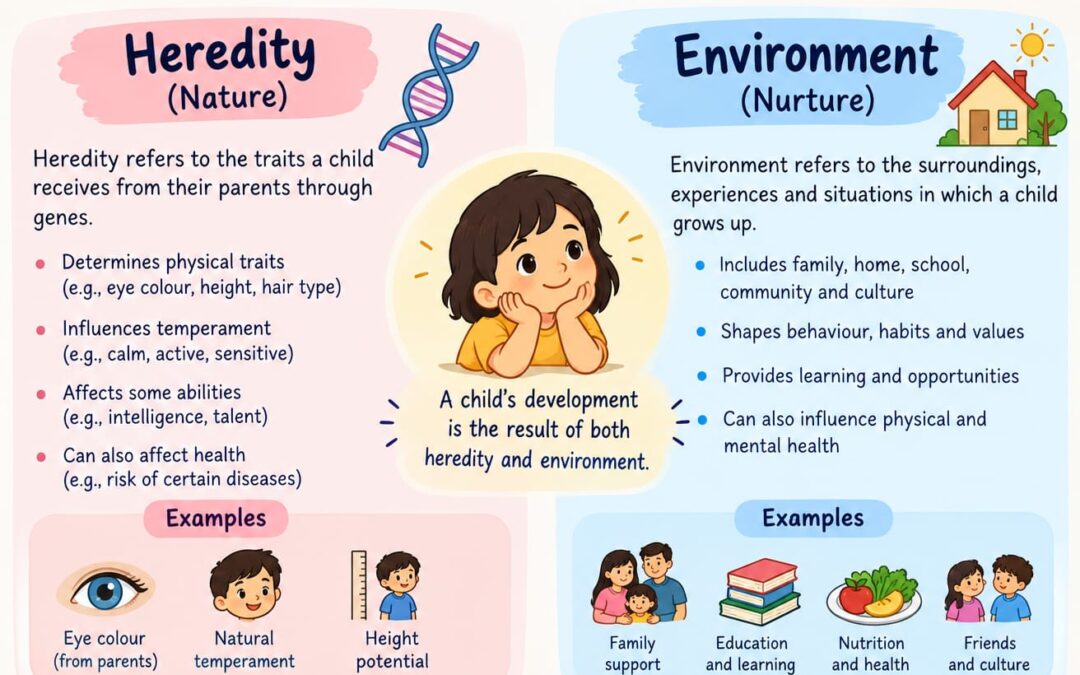
Environment and heredity are two important factors that influence a child’s growth and development. Heredity refers to the characteristics that a child inherits from their biological parents through genes. These characteristics may include natural hair colour, eye colour, aspects of physical growth, and genetic influences on certain abilities and temperaments. Heredity provides the biological foundation for a child’s development. For example, a child may inherit certain physical characteristics from their parents. However, inherited characteristics do not determine every aspect of a child’s future.
Environment refers to the surroundings, experiences, and conditions in which a child grows and learns. It includes family, school, friends, nutrition, culture, education, and social interactions. A supportive environment can help children develop their abilities, confidence, communication skills, and positive habits. For example, a child who receives encouragement, learning opportunities, and emotional support may develop stronger skills over time. Similarly, a child’s experiences at school and home can influence their behaviour, interests, and attitudes.
Both heredity and environment work together to influence child development. Heredity may influence a child’s potential, while environmental conditions can affect how different abilities develop and are expressed. For example, a child may have a natural interest in music, but opportunities to listen to music, practise, and receive guidance can help develop musical skills. Neither heredity nor environment alone explains every aspect of development. In conclusion, child development is the result of a complex interaction between heredity and environment. Parents and teachers should provide children with a healthy, supportive, and stimulating environment so they can develop their abilities and reach their potential.
Difference Between Heredity and Environment
| Heredity | Environment |
|---|---|
| Refers to genetic influences inherited from biological parents. | Refers to surroundings and life experiences. |
| Passed from parents to children through genes. | Experienced through family, school, society, and culture. |
| Influences physical characteristics and aspects of development. | Influences learning, habits, behaviour, and skill development. |
| Example: inherited eye colour. | Example: learning good communication skills at school. |